About
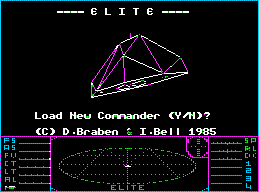
Elite is a game created by Ian Bell and David Braben, first released for the BBC Micro and Acorn Electron in 1984 before being ported to other systems including the Apple II. This repository contains the actual original 6502 assembly source code for the Apple II conversion of Elite (itself derived from the 6502 Second Processor version), heavily annotated line-by-line as a companion to the elite.bbcelite.com website. It can be assembled into five different buildable variants matching different historical Apple II disk releases, each verified to reproduce byte-accurate binaries matching the originals. It is still built using BeebAsm, a BBC Micro assembler, because the Apple II version was originally developed and assembled on a BBC Micro system.
How it differs from the original
The five build variants differ from each other in period-accurate ways: for example, the Ian Bell game-disk variant shows a "Cracked by The Student" loading screen instead of the Firebird logo, and the source-disk variants have differences such as a different dashboard color scheme, an extra startup instruction, vsync-based timing instead of loop-based timing, and a few extra supported keyboard shortcuts. A separate "flicker-free" branch is also available that removes the game's original planet-rendering flicker.
Getting started
Building it requires BeebAsm, Python, and the diskm8 disk-image tool; running the project's build process produces a loadable Apple II disk image that can be run in an emulator or on real Apple II hardware. Command-line options select which historical build variant, starting commander save, and verification/encryption settings to use.
History
This repository is one of several Elite source releases published by the same author covering different original 1980s ports (BBC Micro, Acorn Electron, Commodore 64, NES and others), each paired with detailed line-by-line commentary.
Additional notes
- License
- No open-source license is attached; by default copyright law the author retains rights to the commentary, though the repository is kept online on an educational, non-profit basis and would be taken down if the original copyright holders objected.